
Highlighted News
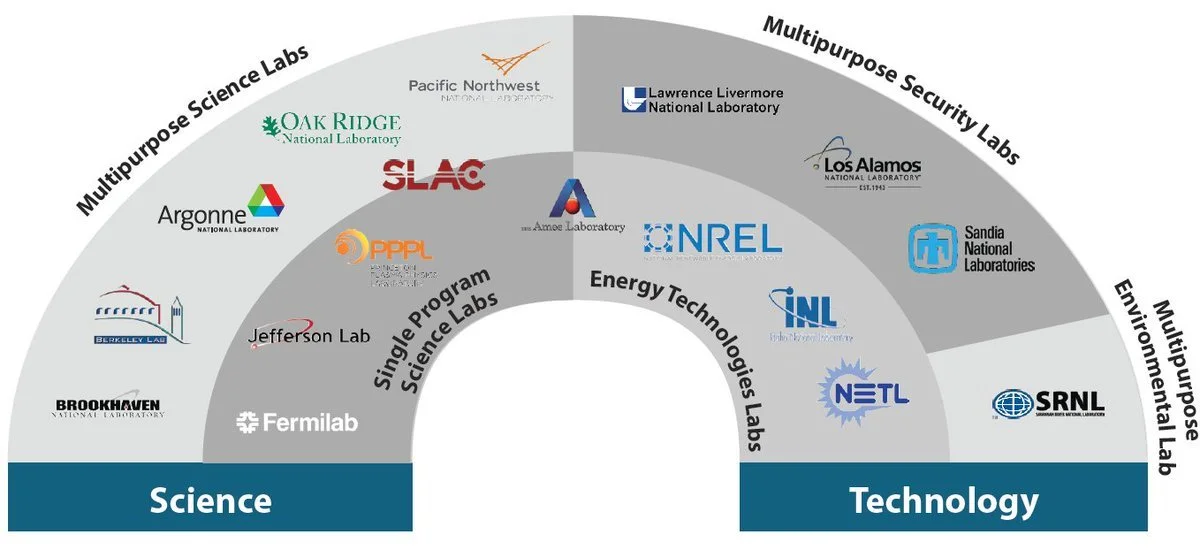
Six group members are spending summer 2026 gaining hands-on experience at leading national laboratories and federal organizations. Charles Dalton, Paige Anderson, Enrique Medici, Illian Carncross, Mateo Halka, and Eric Realmuto are contributing to research at ORNL, LBNL, AFTAC, SRNL, ANL, and LLNL. Their projects span optical characterization, laser remote sensing, nuclear-event analysis, tritium processing, atom-trap trace analysis, and additive manufacturing for nonproliferation—highlighting the group’s commitment to workforce development and national security.
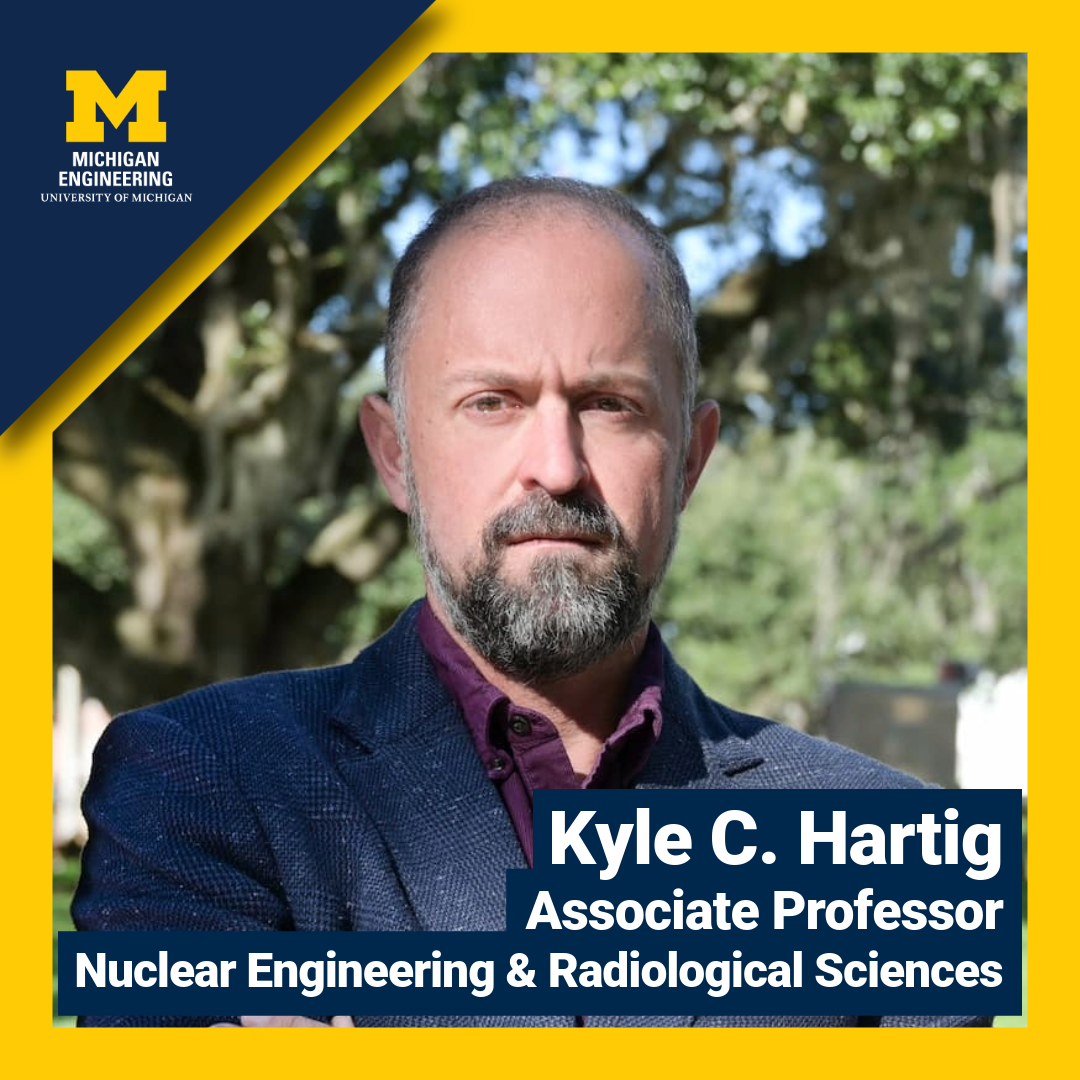
Professor Kyle C. Hartig has been named a Michigan Impact Professor through the University of Michigan’s Look to Michigan Faculty Expansion Program. The appointment recognizes his contributions to transformative research and leadership in nuclear security, advanced sensing, and nonproliferation technologies.

Enrique Medici, a Ph.D. candidate in Nuclear Engineering at the University of Florida, was selected as one of only five recipients of the U.S. Air Force SMART Fellowship. As a SMART Scholar, he will work with the Air Force Technical Applications Center (AFTAC)—including a June 2025 mission visit—gaining first-hand exposure to nuclear detection and treaty verification operations. Enrique, a member of UF’s Optical Science & Nonproliferation group under Prof. Kyle Hartig, brings a strong background in computational modeling and spectroscopy for post-detonation nuclear forensics, underscoring both his promise as a next-generation researcher and UF’s growing impact at the nexus of national defense and scientific innovation.
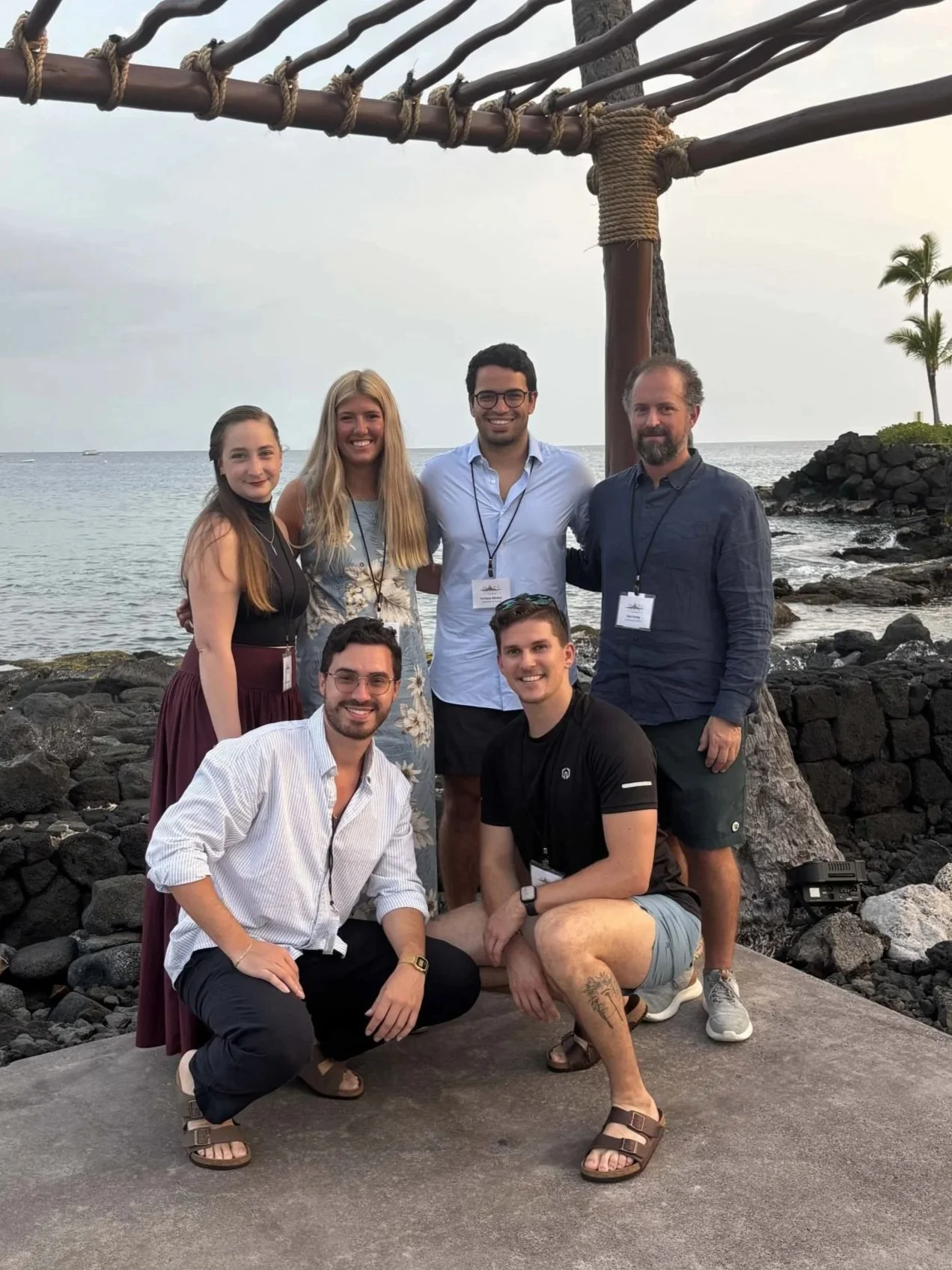
The UF Optical Science and Nonproliferation Group traveled to Kailua-Kona, Hawaii, for the MARC XIII conference, joining an international community advancing radioanalytical chemistry. Under Prof. Kyle C. Hartig’s mentorship, the team contributed across multiple tracks, sparking conversations, new collaborations, and broader visibility for the group’s research. Beyond the sessions, students connected with DOE lab mentors and peers, returning with fresh insight, motivation, and invitations to collaborate.
Nuclear Security and Sensing Labo Relocates to U-M
Prof. Kyle C. Hartig has joined the University of Michigan Department of Nuclear Engineering and Radiological Sciences, relocating the Nuclear Security and Sensing Laboratory to Ann Arbor. The move strengthens the group’s work in nuclear forensics, remote sensing, treaty verification, and nuclear-event characterization while expanding opportunities for student research and training.
Hartig also continues his joint appointment with Argonne National Laboratory’s Strategic Security Sciences Division, creating a direct bridge between U-M, national-laboratory expertise, and mission-focused nuclear security research.

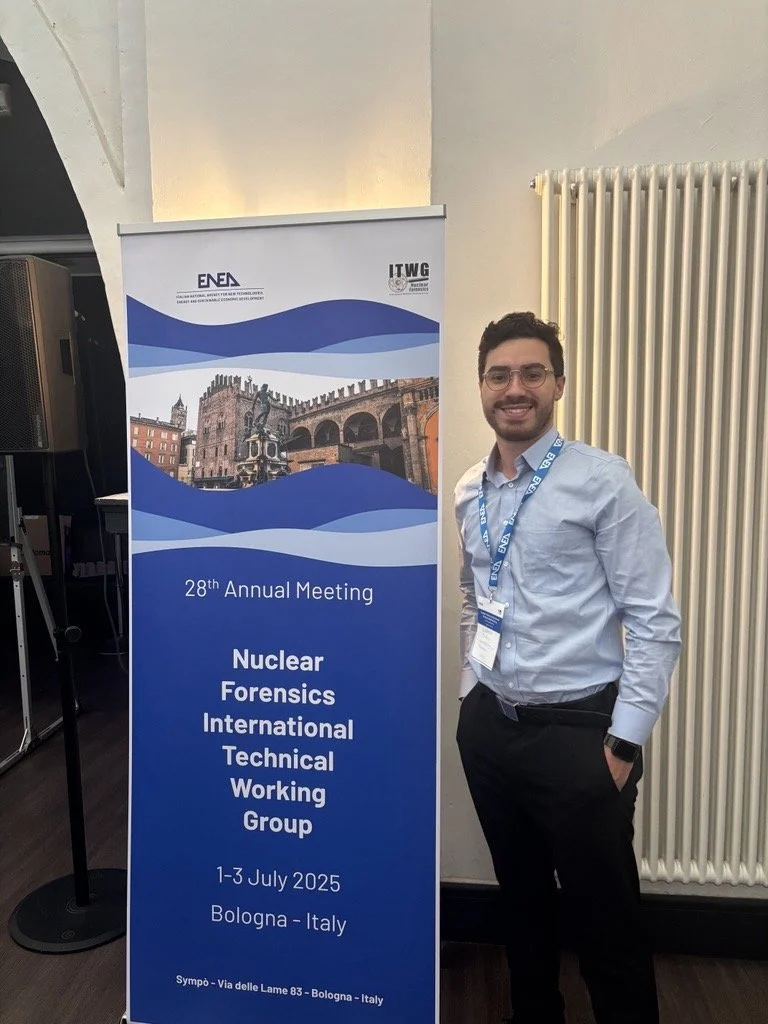
Justin Borrero, a DoD SMART Fellow and Ph.D. candidate in Nuclear Engineering at the University of Florida, represented UF and the Consortium for Nuclear Forensics (CNF) at ITWG-28 in Bologna, Italy. He delivered an invited talk on his doctoral research—integrating high-resolution spectroscopy, data fusion, and isotopic modeling with machine learning to improve nuclear material characterization—and provided an overview of the DOE/NNSA-funded CNF. Justin’s participation underscores his leadership in the nuclear forensics community and highlights UF’s role in advancing international collaboration and technical innovation in nuclear security.
Our vision
A world where agile, precision photonic and quantum-enhanced systems make the unseen measurable and the ambiguous attributable—closing verification gaps and strengthening nonproliferation through deterrence through capability. Our group will be a recognized nexus linking optical science, nuclear security technology, and policy, shaping the next generation of tools and talent that keep society safer.